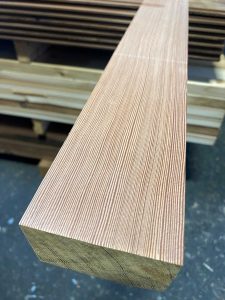
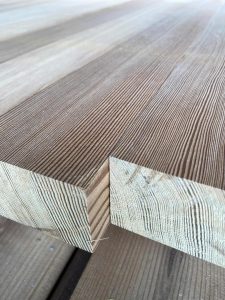
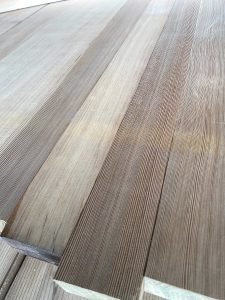
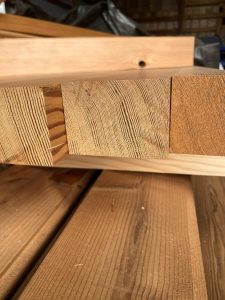
Thermal modification uses high temperatures, typically around 180–220°C, to change the properties of wood. Unlike conventional kiln drying (KD), which primarily removes moisture, thermal treatment further reduces moisture absorption, improves dimensional stability, and can increase resistance to decay.
Commercialized in Europe in the 1990s, thermally modified wood has gradually gained attention in North America for siding, decking, and other exterior applications, partly as an alternative to Western Red Cedar amid supply constraints and relatively high prices.
In British Columbia, thermally modified wood is available in species such as Western Hemlock, Douglas Fir, and Yellow Cedar, with options including clear or knotty grades, vertical or mixed grain, and rough-sawn or profiled products such as T&G, depending on the application, preferences, and budget.